
Mental health counselors play a vital role in promoting wellness, supporting individuals through challenges and strengthening communities. If you’re exploring how to become a mental health counselor, it’s important to understand the education, training and licensure process involved.
This guide outlines five key steps to becoming a licensed professional counselor, starting with a relevant bachelor’s degree and progressing through graduate education, clinical experience and state licensure. The University of West Alabama’s online Master’s in Clinical Mental Health Counseling program offers a flexible path that aligns with licensure requirements in many states, making it a strong option for those looking to begin or advance their counseling career. Following these steps will help you build the foundation, skills and credentials needed to pursue meaningful work in mental health counseling and related career paths within health care and human services.
Step 1: Earn a Bachelor’s Degree in a Related Field
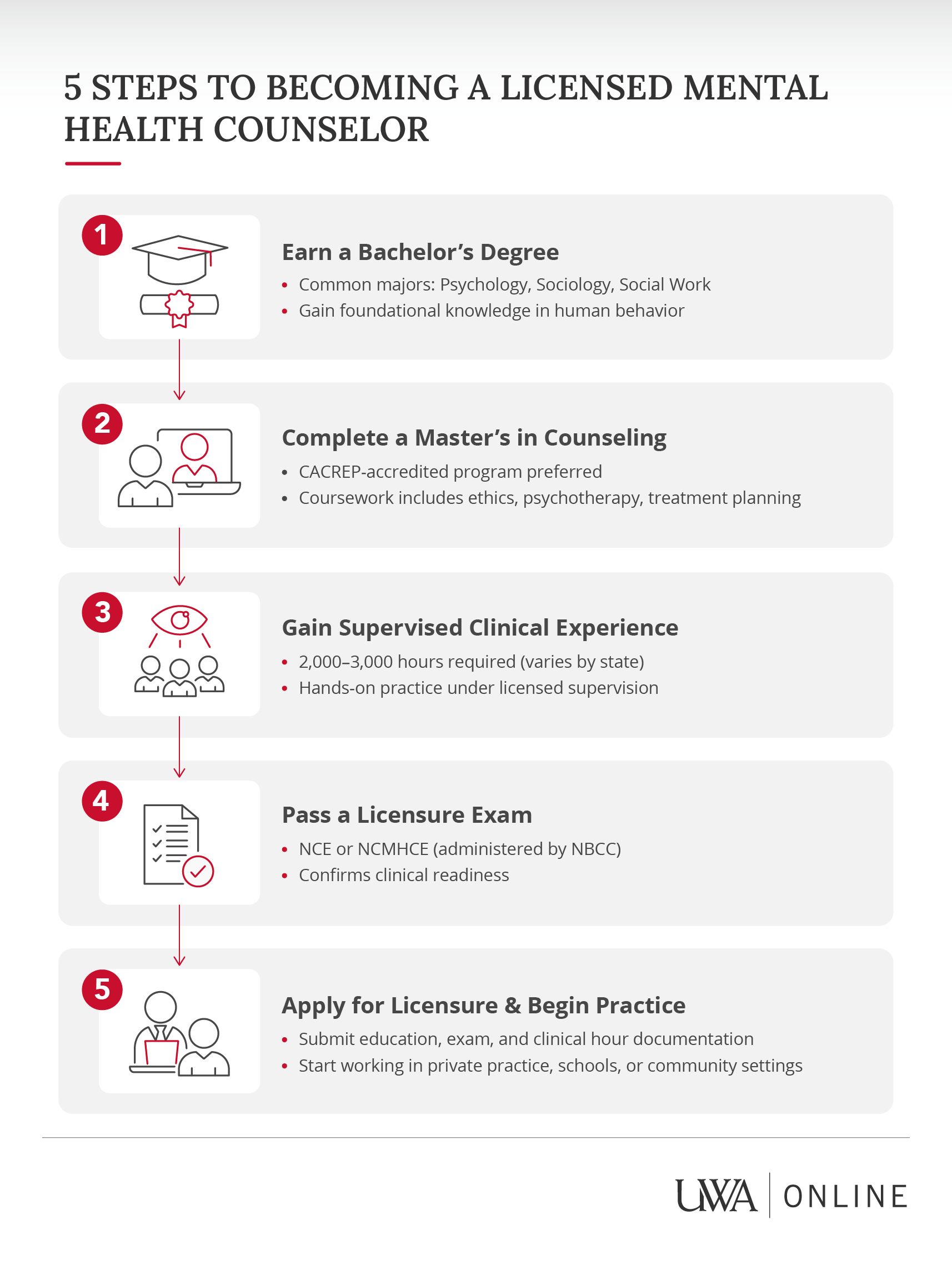
The first step toward a counseling career is completing a bachelor’s degree in a related field. This educational foundation is essential for graduate-level counseling programs and helps develop key skills in communication, research and human behavior.
Common undergraduate majors include psychology, sociology and social work. These programs introduce core topics such as mental health theory, social systems and behavioral science. Students can also explore early specializations, such as substance abuse counseling, school counseling or family therapy, to discover their areas of interest.
Hands-on experience can also strengthen your graduate applications. Work or volunteer roles in social service or health care settings offer insight into the demands and rewards of the profession while demonstrating commitment to the field.
Step 2: Complete a Master’s Degree in Counseling
To qualify for licensure, most aspiring counselors complete a master’s degree in counseling or clinical mental health counseling through an accredited program. Many states expect this graduate degree to come from a CACREP-accredited institution, and a typical counseling degree includes coursework in key theoretical, clinical and research areas that support direct client work:
- Human development
- Treatment planning
- Ethics and professional standards
- Psychotherapy techniques
- Evidence-based interventions
- Multicultural counseling
Experiential learning is also a major component. Most programs require practicum and internship hours, giving students the opportunity to apply their knowledge in real-world settings, either in person or through supervised virtual placements.
UWA’s CACREP-accredited online Master’s in Clinical Mental Health Counseling supports working adults by offering a flexible learning format that doesn’t require relocation. The program provides academic guidance, licensure preparation and access to support throughout the enrollment process.
Step 3: Gain Supervised Clinical Experience
After earning a graduate degree, the next step is completing supervised clinical experience. Most states require between 2,000 and 3,000 hours of post-graduate, supervised experience before candidates can apply for full licensure.
This stage offers critical mentorship and skill development under the guidance of licensed professionals. Clinical supervision ensures ethical, effective care and allows aspiring counselors to refine their techniques in real-world settings.
Supervised hours typically involve working with clients under observation, gaining experience across a range of mental health issues. Some may specialize early by working alongside professionals in addiction counseling, marriage and family therapy, or school-based roles. Beyond meeting state requirements, this hands-on experience prepares future licensed professional counselors to practice independently and confidently.
Learn more about UWA's online Master's in Clinical Mental Health Counseling program.
Learn MoreStep 4: Pass the Required Licensure Exams
To become licensed, candidates must pass a national exam, usually the National Counselor Examination (NCE) or the National Clinical Mental Health Counseling Examination (NCMHCE). Administered by the National Board for Certified Counselors, these exams assess a candidate’s readiness for professional practice.
Eligibility typically requires a graduate counseling degree and completed supervised experience. To prepare, review CACREP-based course content and use official NBCC study materials or exam prep guides.
A passing score confirms that you’ve met national licensing requirements and are ready to apply for state licensure as a licensed professional counselor or similar credential. Professional organizations such as the American Counseling Association can also offer valuable support, networking and continuing education resources as you advance your career.
Step 5: Apply for Licensure and Begin Practicing
The final step is submitting your application to your state licensing board. This typically includes documentation of your education, supervised experience and exam results. Many states also require a background check and evidence of meeting ongoing continuing education requirements.
Once licensed, mental health professionals can pursue a range of career paths in behavioral health. These include private practice, hospitals, schools and community agencies. For those seeking specialization, roles like school counselor, marriage and family therapist, or addiction counselor offer additional focus areas.
According to the U.S. Bureau of Labor Statistics, demand for mental health counselors is projected to grow faster than average, driven by increased awareness and the need for accessible mental health services. This strong job outlook makes counseling both a stable and meaningful career choice.
Moving Forward in Your Counseling Career
If you’re ready to take the first big step, consider the online Master’s in Clinical Mental Health Counseling from the University of West Alabama. This accredited program prepares graduates for licensure and equips them with the clinical, ethical and communication skills needed to thrive in health care and community settings.
With a flexible online format, UWA’s counseling program supports working professionals and career changers alike. Whether your goals include promoting wellness, supporting underserved communities or advancing within behavioral health, this online master’s program can help you build a strong foundation for long-term job growth and impact.
Learn more about UWA’s online Master’s in Clinical Mental Health Counseling program.
Frequently Asked Questions

This section answers common questions about becoming a licensed mental health counselor. It also covers the career outlook for professionals in this field.
What is the fastest way to become a mental health counselor?
Completing an accelerated counseling program or earning an online master’s degree can shorten the timeline, especially for students balancing school with work. However, the full licensure process still includes graduate education, supervised clinical experience and passing required exams, so even the fastest licensure timeline depends on meeting state-specific milestones.
Can you become a licensed mental health counselor online?
Yes. Many online counseling degree programs are designed to meet state licensure standards. While schools provide the education, it’s the state licensing boards that issue credentials, so students must ensure their program aligns with their state’s requirements for a mental health counseling career.
What is the difference between being a therapist and a counselor?
Therapists and counselors both work in mental health, but they often serve different client needs. Counselors typically help with focused issues like stress, relationships or career concerns. Therapists may work with deeper or long-term psychological conditions through psychotherapy. Specialization, licensure and required training can vary based on role and setting.
What type of mental health counselor makes the most money?
Earnings can vary by specialization, region and setting. Clinical counselors in private practice and licensed marriage and family therapists often report higher salaries. According to the U.S. Bureau of Labor Statistics, job growth and demand for mental health counselors remain strong, adding to their earning potential in today’s behavioral health field.